

Hearing a macular degeneration diagnosis for yourself or a loved one often brings up fears of total blindness. It’s a scary thought, and it makes sense to want a clear answer.
Macular degeneration does not cause complete blindness, but it does drastically affect your central vision over time. This is the sharp, detailed sight you rely on to read or recognize faces. Your peripheral, or side, vision typically stays intact, which means most people with the condition retain meaningful, functional sight. That said, advanced macular degeneration can impact quality of life considerably, which is why early detection and ongoing monitoring matter so much.
What Macular Degeneration Does to Your Vision
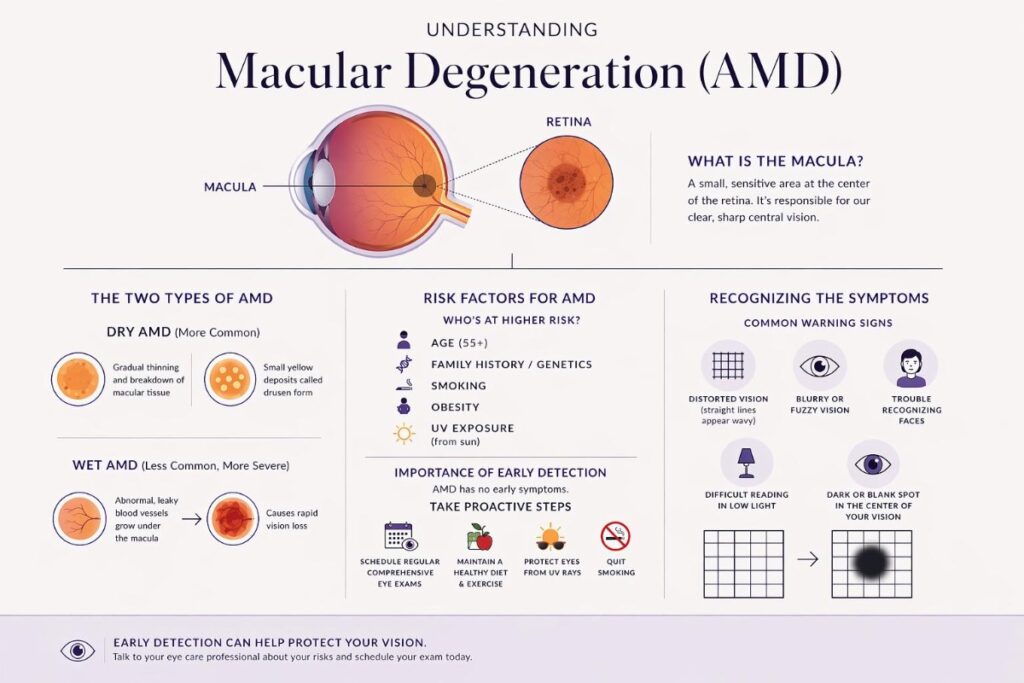
Your macula sits right at the centre of your retina and handles fine detail. When macular degeneration affects this area, straight lines might start looking wavy, and the centre of your view can appear blurry or washed out. Everyday tasks like reading a menu, threading a needle, or recognizing a friend’s expression across the table become harder over time.
Your peripheral vision, the edges of what you see, typically stays unaffected. Because of this, many people with macular degeneration can still move around independently and carry on daily activities. That said, progression varies from person to person, which is why keeping an eye on changes matters so much.
The Two Types of Macular Degeneration
Dry Macular Degeneration
Dry macular degeneration is by far the more common form of this condition. It develops slowly as tiny deposits called drusen build up under the retina, gradually changing how clearly you see in the centre of your visual field. Because these changes happen over months or years, you might not notice them right away.
This gradual pace gives you time to work with your optometrist and track changes in your vision. Early detection opens up options to help slow progression, including specific nutritional supplements known as AREDS2 vitamins, which research suggests can reduce the risk of dry macular degeneration advancing.
Lifestyle changes like quitting smoking, eating an eye-healthy diet, and protecting your eyes from UV light also make a meaningful difference.
Wet Macular Degeneration
Wet macular degeneration is less common, but it moves faster and is much more noticeable. Abnormal blood vessels grow beneath the retina and leak fluid, distorting your central vision quickly. This change can feel sudden, sometimes happening over just days or weeks.
Because the wet form causes faster central vision loss, getting your vision checked promptly once you notice the signs is crucial. When caught early, wet macular degeneration can be treated with anti-VEGF injections delivered by a retinal specialist, which can slow progression and, in some cases, improve vision. Your optometrist can refer you quickly if treatment is needed.
Who Is Most at Risk?
Macular degeneration can affect anyone, but certain factors increase your risk. Knowing where you stand can help you and your optometrist plan the right monitoring schedule for your eyes.
Common risk factors include:
- Age, with the risk increasing significantly after 55
- Family history of macular degeneration
- Smoking, which can double your risk
- Prolonged UV exposure without eye protection
- High blood pressure or cardiovascular conditions
- A diet low in leafy greens and antioxidants
Having one or more risk factors doesn’t mean you’ll develop macular degeneration, but it’s useful information to share with your optometrist at your next eye exam. Together, you can decide how often to check in and what to watch for.
Signs and Symptoms Worth Paying Attention To
Macular degeneration rarely announces itself with obvious symptoms at first. Noticing subtle changes early is one of the most helpful things you can do for your eye health. Keep an eye out for:
- Blurry or distorted central vision, especially when looking at straight lines or text
- Difficulty reading, recognizing faces, or focusing on fine details
- Dark or blank spots appearing in the centre of your field of view
If any of these sound familiar, book an eye exam sooner rather than later. These signs don’t automatically mean you have macular degeneration, but they absolutely warrant a thorough check.

How an Eye Exam Helps Detect & Monitor Macular Degeneration
During an eye exam, the optometrist can examine the back of your eye closely for early warning signs. Drusen deposits, which are small yellowish clumps that form beneath the retina, are often one of the first indicators of dry macular degeneration. We can also check for any retinal tissue changes since your last visit.
Modern eye clinics like Amherstview Eyecare will use an OCT scanner (optical coherence tomography) to capture highly detailed cross-section images of your retina. Think of it like a map of the layers inside your eye that shows changes invisible to the naked eye. OCT imaging is a non-invasive tool that helps your optometrist identify and track conditions with great detail. Retinal imaging adds another layer of analysis, giving your optometrist a broader view of your retina’s overall condition.
Comparing findings over time is incredibly useful for understanding how your eyes change. Consistent eye care gives you a much clearer picture of your overall eye health than occasional check-ins. If something changes between visits, we can spot it early and discuss the right path forward with you.
Steps You Can Take to Protect Your Vision
You can take practical steps right now to support your long-term eye health. Here are a few simple habits with real benefits:
- Wear UV-blocking sunglasses: Protecting your eyes from UV exposure outdoors shields the delicate tissue at the back of your eye from sun damage that accumulates over time.
- Enjoy an eye-friendly diet: Filling your plate with dark leafy greens, colourful vegetables, and antioxidants provides the foundational nutrients your retina needs to stay healthy over the years.
- Schedule routine eye exams: Regular check-ups are one of the best ways to stay ahead of any changes.
Keep a Close Eye on Your Eye Health Today
Take a proactive approach to your eye health and enjoy peace of mind that keeps you ahead of potential vision changes. Amherstview Eyecare is here to help you protect your vision at every stage of life. Whether you have concerns about macular degeneration or simply want a thorough check-up, our team is ready to help!
Book your eye exam in Kingston today and take a positive step toward protecting your sight.