


Key Takeaways
- Prescription sunglasses can give you clear vision and UV protection in one pair.
- They can be especially helpful if you wear glasses full-time or want a backup for days when contacts feel dry, uncomfortable, or inconvenient.
- Long-term UV exposure is associated with eye health concerns like cataracts, macular degeneration, and photokeratitis.
- Look for sunglasses labelled 100% UV protection or UV400, since dark tint alone does not guarantee UV protection.
- Polarized prescription sunglasses can reduce glare from roads, water, snow, and pavement, making them helpful for driving and outdoor activities.
- An up-to-date eye exam, accurate measurements, and the right frame/lens pairing can help your prescription sunglasses feel comfortable and perform well.
Who Actually Needs Prescription Sunglasses?
You already know sunglasses protect your eyes outdoors. But if you wear prescription glasses, a regular pair off the rack does not help you see clearly. You may end up choosing between clear vision and sun protection, and that’s not a trade-off you should have to make.
Prescription sunglasses give you clear vision and UV protection in one pair. They can also be a helpful option if you wear contact lenses but want a backup for days when your contacts feel dry, uncomfortable, or inconvenient. Amherstview Eyecare carries a range of prescription sun options to match different lifestyles and prescriptions.
A few situations where prescription sunglasses can make a real difference:
- You drive often and need sharp, comfortable vision in bright light.
- You find contacts uncomfortable during outdoor activities like hiking, cycling, or yard work.
- You rely on glasses full-time and want a sun option that actually works with your prescription.
What UV Rays Can Do to Your Eyes
Sun exposure doesn’t just affect your skin. Your eyes are exposed to UV rays too, and long-term unprotected exposure can contribute to eye health concerns that may show up later in life.
Eye Conditions Linked to UV Exposure
These are some of the conditions associated with long-term UV exposure to the eyes:
- Cataracts, a clouding of the eye’s lens that blurs vision over time. You can learn more about cataracts, including how they’re managed and when referral for surgery may come into the picture.
- Macular degeneration, which affects your central vision and can make it harder to read or recognize faces.
- Photokeratitis, essentially a sunburn on the surface of your eye that can cause redness, pain, light sensitivity, and temporary vision changes.
What to Look for in UV Protection
Not all tinted lenses block UV rays. A dark tint alone does not mean sunglasses offer proper UV protection, so it’s important to check the lens rating instead of relying on lens colour. When choosing prescription sunglasses, look for lenses labelled 100% UV protection or UV400. That rating means the lenses help block both UVA and UVB rays, which is what your eyes need for proper sun protection.
Your optometrist can help you choose prescription sunglasses that offer the right combination of UV protection, comfort, and clear vision for your everyday needs.
Prescription Sunglasses Compared to Other Options
Why Clip-Ons and Contacts Fall Short
Clip-on attachments can loosen over time, sit unevenly on your frames, and limit which frames you can use in the first place. They can be a workable short-term fix, but they may not be the most comfortable or reliable option for daily use.
If you wear contact lenses outdoors, you might assume you can just grab any pair of non-prescription sunglasses. That can work for some people, but contacts are not always comfortable in bright, dry, windy, or dusty conditions. And while some contact lenses offer UV-blocking benefits, they do not cover the whole eye area the way sunglasses do.
Prescription sunglasses give you another option: clear vision, UV protection, and a comfortable backup for days when contacts are not ideal.
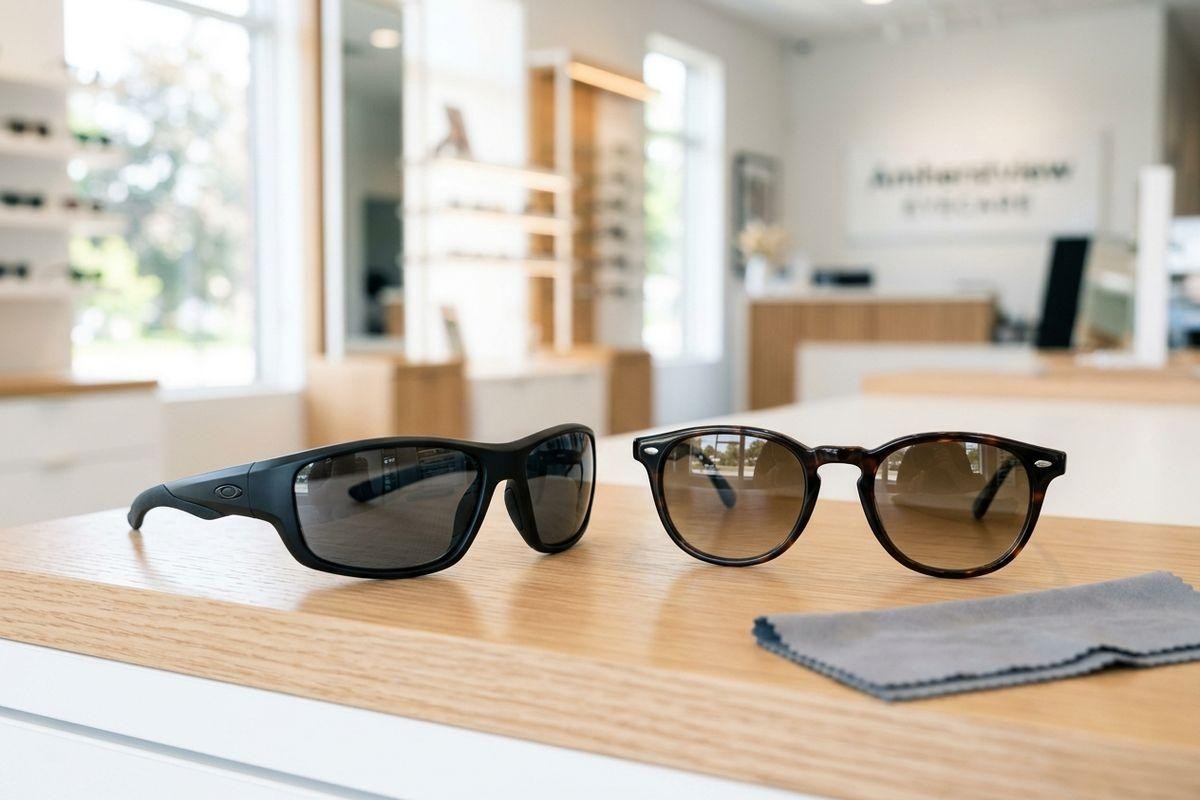
Are Polarized Lenses Worth It?
Polarized lenses are a good option if bright glare bothers you while driving, commuting, or spending time outdoors. They reduce reflected light from flat surfaces like roads, water, snow, and pavement, which can make sunny conditions feel more comfortable.
For prescription sunglasses, polarization can improve visual comfort and clarity in everyday situations like driving on wet roads, walking on bright days, boating, or spending time near water.
Just remember that polarization helps with glare, while UV protection is what helps protect your eyes from sun damage.
Lens Types and What Fits Your Prescription
Single Vision vs. Progressive Lenses
Single vision lenses correct one viewing distance, such as distance or near vision. They often work well for people who mainly need clear distance vision outdoors, such as for driving, walking, or spending time outside.
If you wear progressive lenses in your everyday glasses, you can often get the same type of lens in prescription sunglasses. Progressive lenses support multiple viewing distances in one lens without a visible dividing line, so your vision can stay clear whether you’re looking down at a menu on a patio, checking your dashboard, or looking farther ahead while driving.
Lens Materials to Consider
The material of your lenses affects weight, thickness, durability, and comfort. Exploring your lens options ahead of time can help you have a more informed conversation at your appointment. Your optometry team can also help make sure the lens material works well with your prescription, frame choice, and how you plan to use your sunglasses.
Two common options for prescription sunglasses are:
- Polycarbonate lenses, which are impact-resistant and often a good choice for active lifestyles, outdoor activities, and everyday durability.
- High-index lenses, which can be thinner and lighter for stronger prescriptions, helping reduce lens thickness and edge weight depending on the frame you choose.
Find Prescription Sunglasses That Fit Your Vision and Lifestyle
The process starts with an up-to-date eye exam. Prescriptions can change over time, and sunglasses made with an outdated prescription may not give you the clear, comfortable vision you need. During your exam, your optometrist can confirm your prescription and make sure your eyes are healthy before you order new lenses.
Accurate measurements are also important. Your pupillary distance, which is the spacing between your pupils, helps ensure the optical centre of each lens lines up properly with your eyes. Frame fit, lens material, tint, polarization, and UV protection all play a role in how your prescription sunglasses feel and perform day to day.
From there, the team at Amherstview Eyecare can help you choose frames and lenses that fit your face, your prescription, and your routine, whether you need something sporty for outdoor activities or a classic pair for driving and everyday wear.
Ready for sunglasses that help you see clearly and protect your eyes? Book an eye exam with Amherstview Eyecare and find prescription sunglasses that actually work for you.