


Key Takeaways
- An outdated prescription is one of the most common reasons for blurry vision while wearing glasses.
- Poor frame fit and scratched or smudged lenses can reduce clarity just as much as a wrong prescription.
- Screen fatigue causes temporary blur that glasses alone often can’t fix.
- Conditions like dry eye, cataracts, and glaucoma can blur vision even with corrective lenses.
- Blur that lasts more than a few days is worth getting checked by a Kingston eye doctor.
You put on your glasses, expecting clear vision, but something still looks off. Text is fuzzy. Faces at a distance seem soft around the edges. You’ve already tried cleaning the lenses, and it didn’t help. That familiar frustration is more common than you might think. Amherstview Eyecare sees this concern regularly, and there’s often a clear explanation behind it. A comprehensive eye exam is the fastest way to find that explanation.
Blurry vision while wearing glasses usually points to one of a few fixable causes, including an outdated prescription, a fit problem, eye strain, or an underlying eye condition that hasn’t been addressed yet.
Your Prescription Might Be Outdated
Your vision can shift gradually over months without any dramatic moment when you notice the change. One day, things just look a little softer than they used to. Even a small shift in your prescription can make everything feel slightly off, especially when reading or driving at night.
Glasses made even a year or two ago may no longer match what your eyes actually need today. A routine eye exam helps catch those shifts early, often before they start affecting your daily life in noticeable ways.
If you haven’t had an eye exam recently, that’s a good place to start. Most adults aged 20 to 64 benefit from a comprehensive eye exam once every 2 years, while children, seniors, and people with certain health or eye conditions may need exams more often.
Glasses Fit and Lens Condition Matter
Frame Fit Problems
Even the most precise prescription can fall short if your frames aren’t positioned correctly. When glasses sit crooked or slide down the bridge of your nose, the optical centre of the lens shifts away from your pupil, which often results in unwanted blur.
Frames that sit too low force your line of sight to bypass the lens’s intended sweet spot, while crooked frames, or those with loose nose pads and stretched temples, cause each eye to look through a different, distorted part of the glass. Maintaining a proper fit throughout the day can matter just as much as the prescription itself.
Lens Wear and Tear
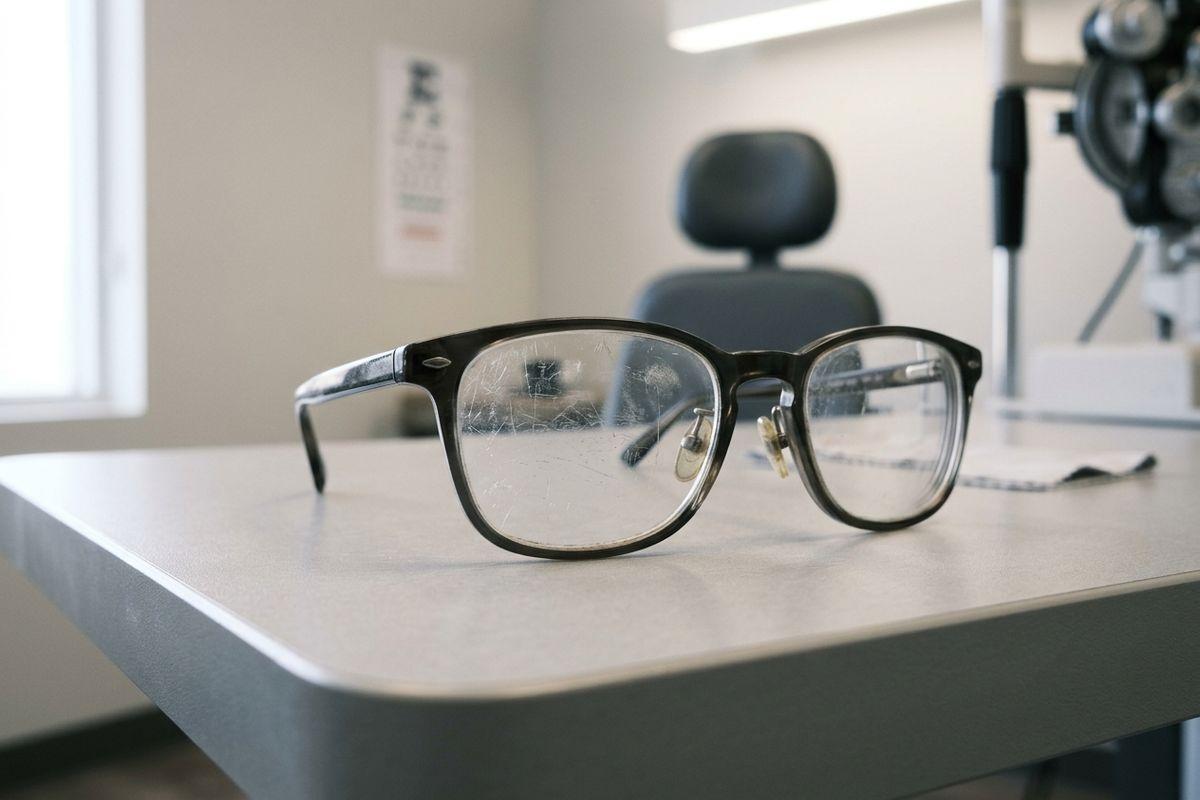
Scratches and smudges do more damage to your clarity than most people realize. A deep scratch can scatter light right where you’re trying to see through it. Worn-down anti-reflective coatings can cause glare and halos, especially at night or under bright office lighting.
If your lenses look hazy even after a good cleaning, it may be time to look at new lenses. An optometrist in Kingston can assess whether the lenses themselves are contributing to the blur.
Eye Strain and Screen Time Can Blur Your Vision
After a long day staring at a screen, your eyes get tired. The muscles that help your eyes focus flex and relax constantly while you look at a monitor, and after hours of that, they can start to fatigue. The result can be a soft, tired blur that may last into the evening.
Glasses correct your refractive error, but they don’t stop your eyes from getting worn out. Taking a short break every 20 minutes, looking at something about 20 feet away for 20 seconds, can help reduce that buildup of strain. If the blur clears up after rest, screen fatigue is likely the cause.
Underlying Eye Conditions Worth Knowing About
Common Conditions Linked to Blur
Dry eyes are one of the most overlooked reasons for blurry vision. Without a stable tear film across the surface of your eye, light doesn’t refract cleanly, and your vision fluctuates throughout the day. Dry eye and blurry vision are more closely connected than most people expect. Astigmatism, if it’s present but not fully corrected in your current prescription, also causes a persistent soft blur that doesn’t sharpen no matter how much you squint.
Conditions That Need Early Detection
Some causes of blur go beyond prescription issues.
- Cataracts cause the natural lens inside your eye to become cloudy, which dims and blurs incoming light
- Glaucoma can affect the optic nerve and peripheral vision over time, often before noticeable symptoms appear
Both conditions respond much better to management when caught early. Diagnostic testing at a Kingston eye care clinic can identify these issues before they progress further.
When to Book an Eye Exam in Kingston
Some blur is minor and clears up on its own. Other times, it’s a signal worth paying attention to. If your vision stays blurry, comes on suddenly, or feels different from your usual experience, it’s worth getting looked at promptly.
A Kingston eye doctor can pinpoint the cause through a comprehensive eye exam, whether that’s an outdated prescription, a fit issue, dry eye, or something that needs closer monitoring. The sooner you get checked, the sooner you have a clear answer and a clear plan.
At Amherstview Eyecare, our team takes the time to understand what you’re experiencing and works through the possible causes with you. Serving families and adults throughout the Kingston area, our clinic offers comprehensive eye exams, contact lens fittings, children’s eye exams, and a curated selection of glasses. Book your eye exam today and get to the bottom of what your eyes are trying to tell you.